


DMV Written Exam Practice App
4.774.00 Reviews
App Specs
- Version
- 2.8
- Updated On
- License
- Free
- Downloads
- 100,000+
- Developer
- Epic Apps Studio
- Categories
- Auto & Vehicles
- Platform
- Android
Screenshots
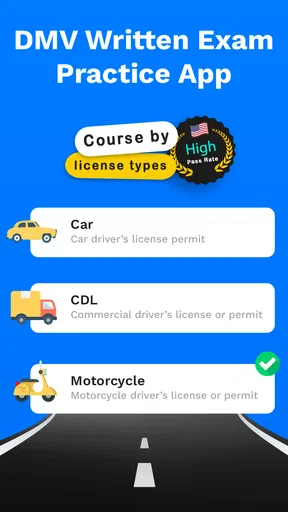
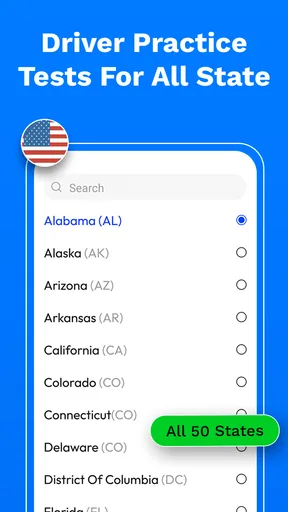
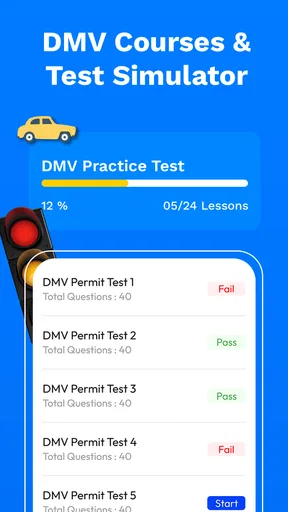
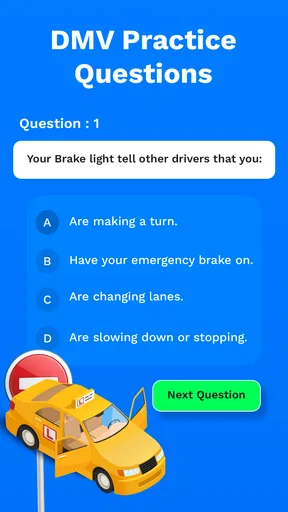
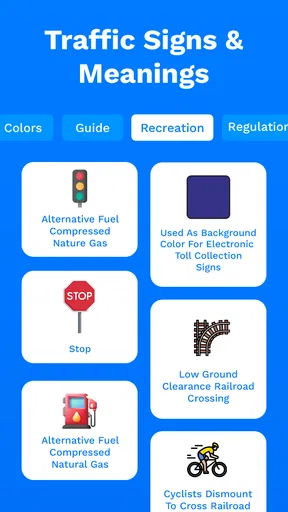
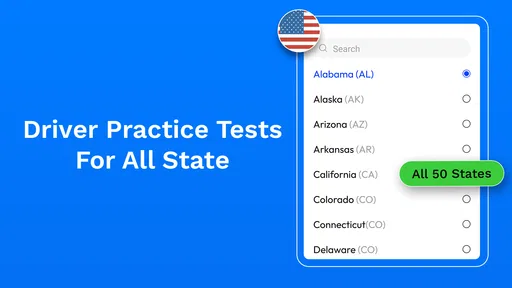
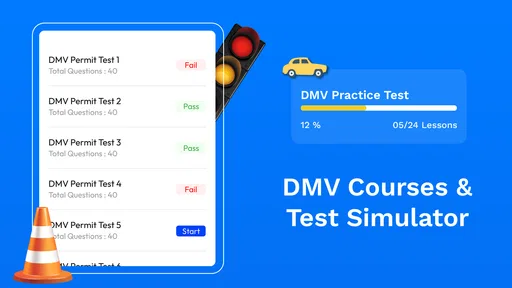
 Analysis by AppCompare
Preparing for a learner’s permit exam can feel strangely difficult: the handbook is full of useful information, but it is not always easy to turn that information into quick decisions under test conditions. I tried DMV Written Exam Practice App from Epic Apps Studio as a study companion, focusing on the complete journey from opening a practice session to deciding what to review next. My overall impression is that it is most useful when you already know which state’s rules you need to study and want repeated written-test practice rather than another long reading assignment.
This is a free app in the Auto & Vehicles category, aimed at people preparing for a DMV written exam and drivers permit test. It is rated for Everyone, works on devices running Android 7.0 or later, and the current version is 2.8. The app has reached over 100 thousand installs, with a 4.7 average from more than 250 ratings. Those figures suggest that it has found a clear audience, but they do not remove the need to check whether its practice style suits the way you learn.
From an uncertain starting point to a more focused study routine
The best place to begin is not by rushing through questions. First, I treated the app as a way to identify my weak areas. A learner who opens it without knowing the relevant state or exam scope may be tempted to answer everything quickly, but permit rules can vary significantly between states. The app’s central promise is broad coverage for all states, so the practical responsibility remains with the user: choose the material that matches the license or permit being pursued and keep the official driver handbook nearby.
That combination matters because practice questions are useful for recall, while the handbook remains the authority for wording, exceptions, signs, penalties, and local rules. I would not use this app as a replacement for reading the official material. I would use it after a first reading, when I need to discover whether I can recognize the correct answer without looking it up.
For a new driver, the initial problem is often not lack of effort but lack of feedback. Reading several pages can create a comfortable feeling of progress, yet it may not reveal which details disappear when the material is presented as a question. A practice app changes the starting condition: instead of asking, “What should I study today?” I can begin with a short test and let the mistakes point toward the next topic.
How I used a session without turning it into guessing practice
I found it more productive to answer each question as if it were part of the real written exam. I read the full wording, considered every option, and avoided changing an answer simply because another choice looked more familiar. Afterward, I reviewed the questions I missed and wrote down the underlying rule in my own words. This small handoff—from the app’s question to my own note—is where much of the learning happens.
A useful rule is to separate knowledge errors from reading errors. If I had never learned the rule, that was a handbook problem. If I knew the rule but missed a word such as “not,” “unless,” or “always,” that was a test-reading problem. Treating both mistakes the same way wastes study time. The app can expose the mistake, but I still have to diagnose why it happened.
Worth Reading Before You Choose

EA SPORTS FC Mobile 26 Is a Bigger Football Game, but It Takes Time

Flipboard Shows What News Apps Must Do Beyond the Feed

Switching to Android Auto Means Rethinking Your Driving Routine

Google Calendar Makes a Crowded Week Easier to Manage

Ludo King Makes the Most of the Minutes Between Plans

Baby Panda World Brings Quick Play to Modern Phones, but Its Game Library Feels Busy
I also avoided repeating a question immediately after getting it wrong. Instant repetition can create short-term memory rather than understanding. A better routine is to finish a group of questions, revisit the relevant handbook section, and then return later. That delay makes the second attempt more meaningful because I am testing recall rather than recognizing the screen.
Making the workflow work for a busy day
For an everyday scenario, imagine someone studying after work with only a small amount of energy left. Instead of promising to read an entire manual, that person can open the app, complete a focused practice session, and use the missed questions to choose one handbook section for the next evening. The app is especially convenient in this role because it turns an unstructured study period into a clear sequence: attempt, inspect mistakes, verify the rule, and try again later.
I would not recommend cramming by tapping through sessions for hours. That approach can make a learner feel confident while leaving important gaps untouched. Short, deliberate sessions are better, particularly when each session has a purpose. One day might be about signs, another about right-of-way, and another about the rules that caused repeated mistakes. The app becomes more valuable when it is used as a diagnostic tool rather than as a score-chasing game.
Another practical tip is to keep a separate list of uncertain answers, not only incorrect ones. Sometimes I selected the right option by elimination or intuition. Marking that question as uncertain prevents a lucky guess from being mistaken for reliable knowledge. On the next review, I can check whether I understand the reason behind the answer.
The handoff between app practice and official preparation
The most important handoff is from a practice result to an authoritative source. When an answer surprises me, I do not assume the app’s wording is the final word. I compare the topic with the current handbook for my state and pay attention to the exact language used there. This is especially important for limits, distances, fines, and exceptions, where a small difference can matter on an exam.
This workflow also answers a question many learners have: can the app alone prepare someone for the permit test? In my view, it can support preparation, but it should not be the only source. It is good at creating retrieval practice and showing where confidence is weak. It is less suitable as a complete explanation of every rule because answering a multiple-choice question is not the same as understanding the broader situation on the road.
Parents and instructors can use the same handoff in a slightly different way. A learner can complete a session independently, then bring the missed topics to a conversation or driving lesson. For example, a question about yielding can become a discussion of what that rule looks like at an actual intersection. The app supplies a prompt; the adult supplies context and correction.
That makes it more useful than simply handing a teenager a long document and asking them to memorize it. At the same time, it is not a substitute for supervised driving, observation, or practical instruction. Written knowledge and safe vehicle control are connected, but they are not interchangeable skills.
What the result tells you—and what it does not
A strong practice result is encouraging, but I would treat it as evidence of readiness only when it remains stable across different sessions and after a meaningful delay. One excellent attempt can come from familiar questions, lucky choices, or memorized answer positions. The more convincing result is consistent performance combined with the ability to explain why an answer is correct.
This is where the app’s simple purpose works in its favor. It keeps attention on written-test preparation instead of surrounding the task with unrelated driving features. If my goal is to rehearse permit questions, I can stay focused on that outcome. The trade-off is that the app does not replace the wider preparation process: handbook reading, state-specific verification, and practical driving experience still have to happen elsewhere.
I would also pay attention to the quality of my wrong-answer review. Merely seeing a corrected choice is not enough. I ask myself what clue in the question led to the answer, which rule supports it, and how a similar question could be phrased differently. This turns a result into transferable knowledge instead of a single memorized response.
Where the study flow becomes less comfortable
The first point of friction is the broad “all states” positioning. It is helpful for reach, but broad coverage can make a learner less certain about whether a particular question reflects the exact exam they will take. Anyone preparing for a permit should confirm the state, license class, and current requirements independently. If that verification feels like too much work, a state-specific official resource may be a better starting point.
The second limitation is inherent to multiple-choice practice. A learner can become skilled at spotting familiar patterns without developing a deep understanding of traffic situations. I noticed that the app is strongest for recall and weakest when I expect it to explain the reasoning behind every rule in the detail of a textbook or instructor. That does not make it ineffective; it defines the role it should play.
There is also a financial detail to consider. The app is free to install and use, while in-app purchases are listed at $5.49 per item. Before paying for anything, I would first establish whether the free experience already covers my study needs and whether an optional purchase addresses a real gap. A paid add-on is worthwhile only if it improves the specific workflow I need; it should not be treated as a shortcut around learning the material.
Another possible source of friction is motivation. Practice questions provide a clear task, but they can encourage repetitive tapping. If I notice myself answering quickly without reading, I stop and switch to handbook review. The app cannot decide whether I am studying carefully or merely collecting completed sessions, so discipline remains part of the process.
Who should use it, and who should choose something else?
I would recommend it to a first-time permit applicant who wants a convenient way to test recall, a learner who has already read some official material, or a parent looking for a structured activity to discuss with a new driver. It is also a sensible fit for someone who learns well through questions and benefits from discovering weak topics through practice rather than rereading everything from the beginning.
I would be more cautious about recommending it to someone who needs detailed teaching from the ground up. If you do not understand basic signs, right-of-way concepts, or state terminology, jumping directly into questions may feel like guessing. In that case, the official handbook, a classroom course, or an instructor-led resource is likely the better first step.
It may also be the wrong choice for a learner who wants one definitive, state-issued study source or who prefers video explanations and interactive driving simulations. A handbook is better for exact legal wording. A teacher is better for resolving ambiguous situations. A simulator may be better for visual learners. This app earns its place between those options as a practice layer, not as a complete replacement for them.
For users concerned about device compatibility, the app supports Android 7.0 and newer. It is free, carries an Everyone age rating, and comes from Epic Apps Studio. Those details make it approachable for a wide range of learners, although the presence of optional purchases means I would still review the purchase screen carefully before confirming anything.
My practical verdict after following the full workflow
After moving from an uncertain starting point through practice, review, handbook checking, and a later retest, I see DMV Written Exam Practice App as a focused revision companion. Its real value is not that it magically teaches every driving rule. Its value is that it gives a learner a repeatable way to expose weak recall and decide what deserves attention next.
The strongest workflow is simple: select the material relevant to your state, answer carefully, separate guesses from genuine knowledge, verify difficult rules in the official handbook, and return after a delay. That process makes the app more dependable than casual question tapping. It also protects against one of the biggest risks of practice apps: confusing familiarity with readiness.
My recommendation is therefore positive but specific. Use it when you need structured written-exam practice, especially after beginning your official reading. Do not rely on it for legal certainty, practical driving instruction, or a complete explanation of every topic. With those boundaries in mind, its free entry point, broad state focus, Everyone rating, and strong user response make it a useful addition to a permit-study routine. I would install it for targeted practice, keep the handbook beside it, and judge readiness by understanding—not by one impressive score.
Pros
- Covers common U.S. road signs
- rules
- and traffic-law questions.
- Practice tests help identify weak topics before the real exam.
- Questions are presented in a simple
- beginner-friendly format.
- Useful for quick study sessions during commutes or breaks.
- Progress tracking makes it easier to monitor preparation over time.
Cons
- Content may vary by state and require checking against your DMV handbook.
- Some questions may feel repetitive after several practice sessions.
- Explanations may not fully clarify complex traffic-law situations.
- Free features may include ads or limits on available practice tests.
- Passing the app’s quizzes does not guarantee success on the official exam.
FAQs for DMV Written Exam Practice App
What is the DMV Written Exam Practice App?
The DMV Written Exam Practice App is a study tool designed to help users prepare for the written knowledge test required to obtain a driver’s license. It typically includes practice questions based on traffic laws, road signs, safe driving practices, and state-specific regulations. The app is intended for revision and self-assessment, not as a replacement for the official driver handbook or DMV requirements.
Does the app include questions for my state or country?
Coverage depends on the version of the app and the location selected during setup. Many DMV practice apps organize questions by U.S. state, while some may offer only general driving-test material. Before relying on the content, check whether your state is supported and confirm that the questions reflect the latest official handbook. Rules, penalties, and testing procedures can vary considerably between jurisdictions.
Can I use this app instead of reading the official DMV handbook?
The app can make studying more convenient, but it should not be your only source of preparation. Practice questions are useful for identifying weak areas and becoming familiar with the test format, while the official DMV handbook contains the complete and current rules. We recommend reading the handbook first, then using the app to review signs, laws, and driving situations until your results are consistently strong.
Does the DMV Written Exam Practice App work offline?
Offline availability depends on the app version and how its question database is delivered. Some features may work without an internet connection after the necessary content has been downloaded, while advertisements, account synchronization, updates, or certain explanations may require online access. It is a good idea to open the app before traveling and confirm that practice tests remain accessible in offline mode.
Is the app free, and are there advertisements or in-app purchases?
Many DMV practice apps can be downloaded for free but may include advertising, optional premium features, or purchases that unlock additional tests and remove ads. The exact pricing and available features can change between Android and iOS versions. Review the store listing carefully before downloading, especially if you want unlimited practice, detailed explanations, progress tracking, or an ad-free study experience.


